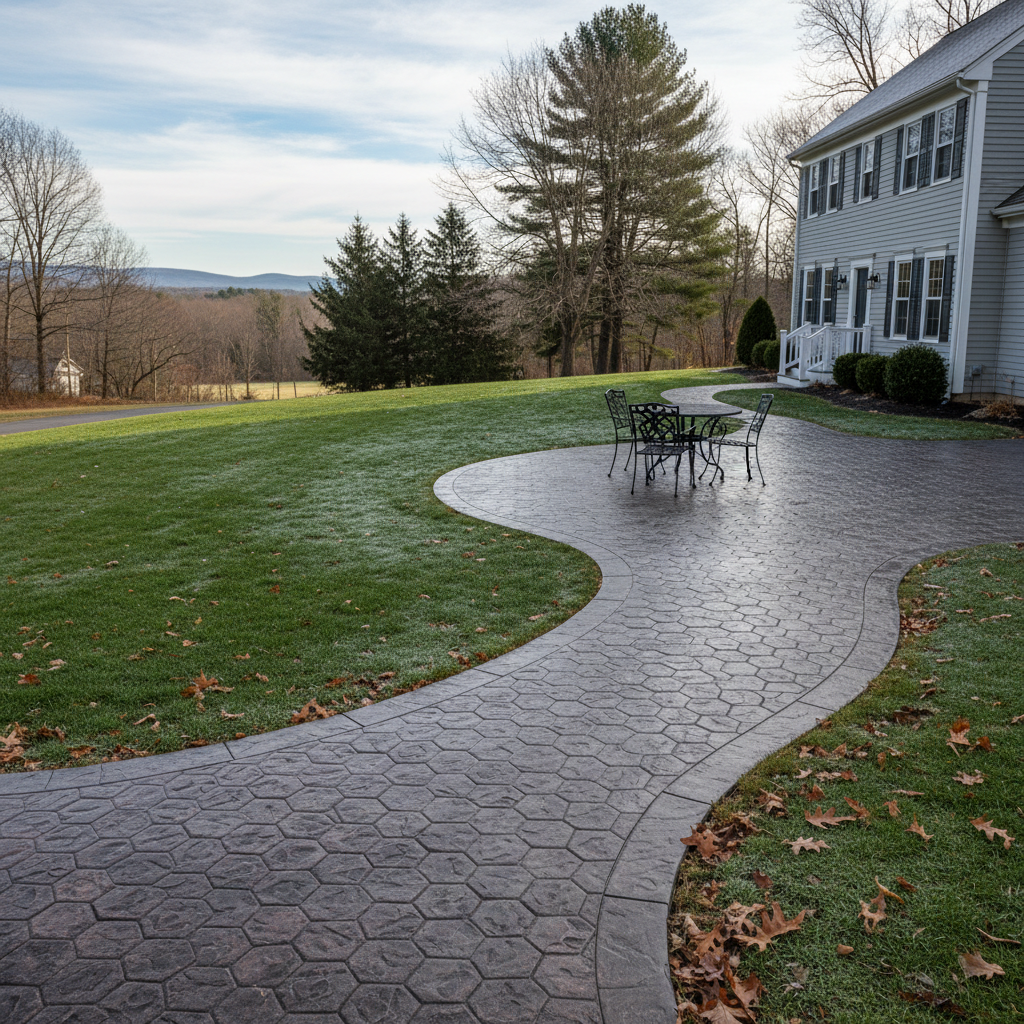
You are looking to upgrade your home with some new concrete. Maybe you want a patio for those summer cookouts. Perhaps you need a sturdy new driveway. That is a great idea. But before you jump in, we need to talk about something important: the weather here in West Greenwich, RI. Our climate is not just a small detail when it comes to concrete work. It is a major factor. Getting the timing right and knowing how to protect your concrete investment year-round can make all the difference. This will help your concrete surface last for decades instead of giving you headaches.
When is the Best Time to Pour Concrete in West Greenwich?
It is all about temperature and moisture for concrete pouring. Concrete does not just dry. It cures through a chemical reaction. This reaction is sensitive to the elements. The sweet spot for pouring concrete is when temperatures are consistently between 50 and 60 degrees Fahrenheit. You want to avoid extreme temperatures, both hot and cold. This will give you the best results for your West Greenwich concrete project.
- Late Spring (May-June): This is often a good time for Concrete Contractor work. The ground has thawed out after winter. Temperatures are usually mild. This gives the concrete plenty of time to cure. It cures before the really intense summer heat hits.
- Early to Mid-Fall (September-October): Many pros, including our team at Allied Concrete & Masonry, think fall is actually the best season for Concrete Contractor projects. The weather tends to be cool but not cold. Humidity is lower. You also get those nice cool nights that help the concrete cure slowly and strongly. In addition, it gives your concrete ample time to gain strength. This strength is important before our harsh West Greenwich winters set in.
We generally try to stay away from July and August if we can. We can work in the summer. However, those high temperatures can make concrete dry too fast. This can lead to issues like cracking if it is not managed carefully. And winter? You should forget about pouring new concrete in winter. This is unless it is absolutely necessary. You would also need specialized, heated setups for winter Concrete Contractor work. Cold temperatures can freeze the water in the mix. This can weaken the concrete significantly.
Weather Conditions That Affect the Job
It is not just the season that matters. The daily conditions also affect the job. When we are planning a pour for Allied Concrete & Masonry, we check more than just the temperature. We look at many factors for your West Greenwich Concrete Contractor project.
- Temperature: As we said, 50-60°F is ideal. If it is too hot, meaning above 90°F, the concrete can dry too quickly. This can cause shrinkage cracks as well as a weaker surface. If it is too cold, meaning below 40°F, the curing process slows way down. If it freezes, the water in the concrete expands. This can cause serious damage to your new concrete.
- Rain: You absolutely do not want rain on fresh concrete. Even light rain can dilute the cement paste at the surface. It can also wash away textures. In addition, it can create a weak top layer. We need at least 2-3 days of dry weather after a pour. This is important for proper curing of your Concrete Contractor project.
- Wind: A steady breeze might seem harmless. However, it can strip moisture from the surface of fresh concrete very fast. This rapid evaporation can lead to plastic shrinkage cracks. If it is windy, we take steps like using windbreaks. We also use special compounds to slow that evaporation.
- Humidity: Low humidity speeds up evaporation. This is similar to wind. High humidity, on the other hand, can slow down the curing process. We adjust our mix as well as our finishing techniques. This is based on the humidity levels. This helps us make sure you get a strong, even cure for your West Greenwich concrete.
Protecting Your Concrete Investment Year-Round in West Greenwich
Once your concrete is in, the job is not over. Our Rhode Island climate, with its freeze-thaw cycles and sometimes heavy precipitation, really puts concrete to the test. Here is how to keep your concrete looking good. This will also help it last a long time.
1. Seal It Up
This is probably the most important thing you can do for your Concrete Contractor project. A good quality concrete sealer acts like a raincoat for your concrete. It prevents moisture from getting into the surface. Why is that important here in West Greenwich? Water expands when it freezes. When water gets into the pores of your concrete and then freezes, it pushes outwards. This can cause flaking, spalling, and cracking. Sealing minimizes this problem. You should ideally seal new concrete before its first winter. Then you should reapply every few years. This depends on the sealer and how much traffic the concrete gets.
2. Mind the Freeze-Thaw Cycles
West Greenwich experiences many freeze-thaw cycles. These cycles are hard on concrete. This is especially true if it is not properly installed or protected. Our local soil, particularly the glacial clay deposits common in areas like West Greenwich, can hold a lot of moisture. When that moisture freezes and thaws, it can cause the ground to heave. This puts stress on your concrete. That is why proper base preparation as well as good drainage are essential. We make sure of this when we install concrete for Allied Concrete & Masonry.
If you have new concrete that is less than a year old, try to minimize heavy traffic on it during its first winter. The concrete is still gaining full strength. Those freeze-thaw cycles can be particularly damaging to new concrete.
3. Be Smart About Deicers
It is tempting to put down salt when ice builds up. However, many deicing chemicals can be very harsh on concrete. This is especially true for those containing ammonium nitrate or ammonium sulfate. They can cause surface damage. This is particularly true on newer concrete. Try to use sand for traction. You can also opt for concrete-safe deicers if you absolutely need them. Shoveling promptly is always the best first defense against ice.
4. Keep it Clean and Clear
Regular cleaning, especially after winter, helps remove any salt residue or grime. This grime can degrade the surface. In addition, you must make sure water drains away from your concrete surfaces. Standing water, especially in winter, is an enemy of concrete. This is particularly relevant in West Greenwich. We often deal with varied terrain as well as sometimes tricky drainage for Concrete Contractor projects.
Taking these seasonal considerations seriously will help ensure your concrete projects stand strong. This applies whether it is a new walkway or a whole driveway by Allied Concrete & Masonry. Your concrete will stand strong against whatever our New England weather throws at it.