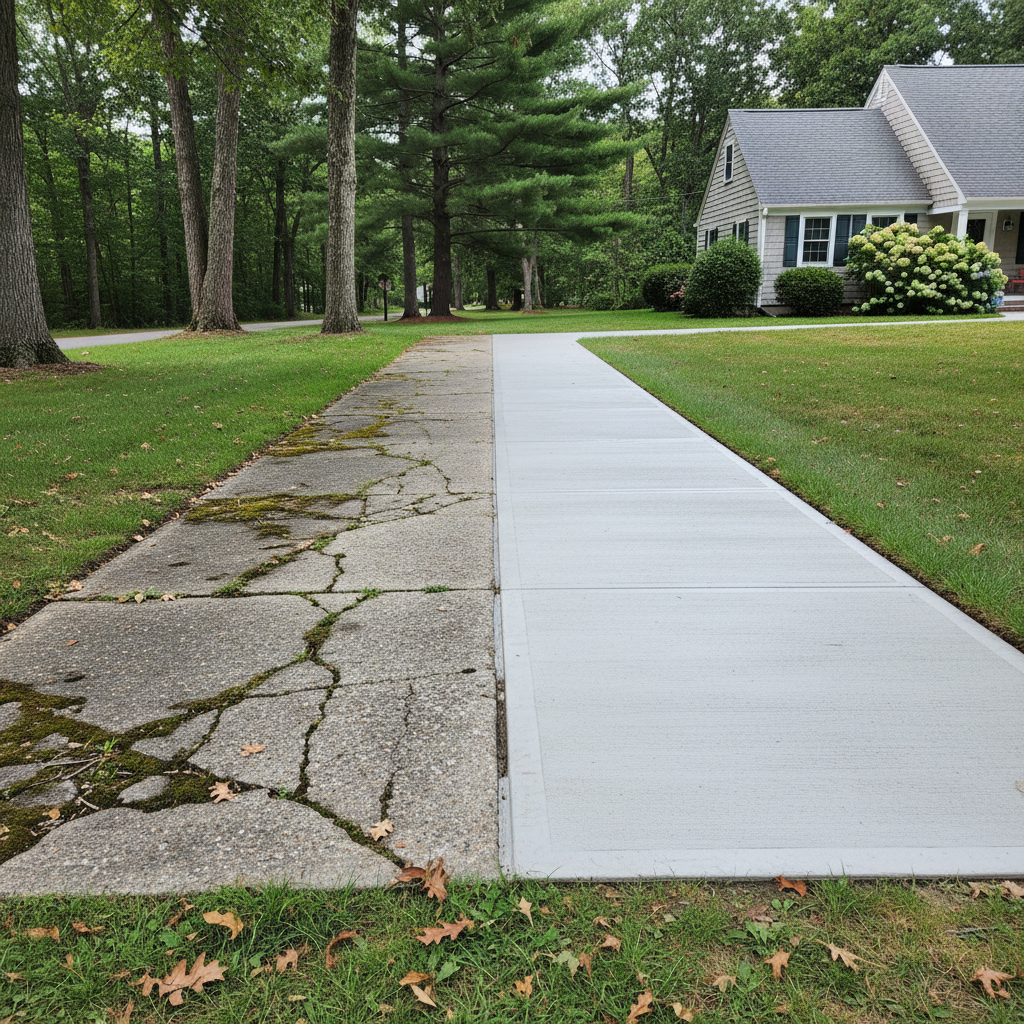
Alright, so you're thinking about new sidewalks for your place here in West Greenwich. Maybe the old ones are cracked, or you're just looking to spruce things up. Good for you. When it comes to concrete sidewalks, you've mainly got two big choices: plain old concrete or stamped concrete. Both have their place, but they're definitely not the same, especially when you factor in our Rhode Island weather and soil.
Plain Concrete: The Workhorse You Know
Let's start with plain concrete. This is what most folks picture: a solid, gray slab. It's the standard for a reason, and it’s what we've been pouring for decades at Allied Concrete & Masonry.
Cost: This is where plain concrete really shines. It's the most budget-friendly option, hands down. Fewer materials, less specialized labor, simpler process. If you're trying to keep costs down but still need a solid, durable surface, plain concrete is your go-to.
Durability & Maintenance: Super tough. A properly poured and cured plain concrete sidewalk can last 30 years or more, easily. It handles our freeze-thaw cycles pretty well, especially if it's got good drainage and proper control joints. Maintenance? Pretty minimal. Keep it clean, maybe seal it every few years, and you're good. If a section does crack, it's usually a bit easier and cheaper to patch or replace a section than with stamped concrete.
Appearance: It's... concrete. Gray, functional, clean. It doesn't add a lot of aesthetic flair, but it's not offensive either. It provides a neutral base that lets your landscaping or house exterior be the star. Some people like the understated look, and it certainly doesn't go out of style.
Stamped Concrete: The Fancy Cousin
Now, stamped concrete. This is where you get to add some serious curb appeal. We pour regular concrete, but then, while it's still wet, we press patterns and textures into it to mimic other materials like brick, stone, or even wood. Then we usually add color.
Cost: Expect to pay more, sometimes significantly more, than plain concrete. The materials are more expensive (color hardeners, release agents, sealers), and the labor is more specialized and time-consuming. It's an art form, really, and you're paying for that craftsmanship.
Durability & Maintenance: It's still concrete underneath, so it's very durable. However, the surface can be a bit more finicky. The colors can fade over time, especially with our strong summer sun and harsh winters. It absolutely needs to be sealed regularly, usually every 2-3 years, to protect the color and pattern and prevent efflorescence (those white powdery deposits). If you skip sealing, it'll look tired fast. And if a section cracks or spalls, matching the pattern and color for a repair can be a real challenge, making repairs more noticeable and often more expensive.
Appearance: This is its biggest selling point. You can get some truly stunning results. Imagine a sidewalk that looks like natural flagstone leading to your front door, or a brick-patterned path around your garden. It adds texture, color, and a custom, high-end look that plain concrete just can't touch. It can really elevate your home's exterior.
My Recommendation for West Greenwich Homeowners
Here's the deal. For most homes in West Greenwich, especially with our clay-heavy soils and the constant freeze-thaw cycles we get, a well-installed plain concrete sidewalk is often the smartest choice for pure functionality and long-term, low-hassle durability.
It's robust, it's cost-effective, and it holds up like a champ. You can always dress it up with landscaping around it. If you're on a tighter budget, or if you just want something that works and lasts without a lot of fuss, plain concrete is your winner.
However, if you've got the budget, you're committed to the regular sealing and maintenance, and you really want that custom, high-end look to match a specific architectural style or landscaping vision, then stamped concrete can be absolutely beautiful. It's a fantastic way to add a unique touch to your property.
Ultimately, it comes down to what you prioritize: cost and minimal maintenance, or maximum aesthetic impact with a bit more upkeep. Either way, make sure you're getting a contractor who knows what they're doing. A bad concrete job, plain or stamped, is a headache you don't want. Give us a shout at Allied Concrete & Masonry if you want to talk specifics for your property. We've poured enough concrete around here to know what works and what doesn't.