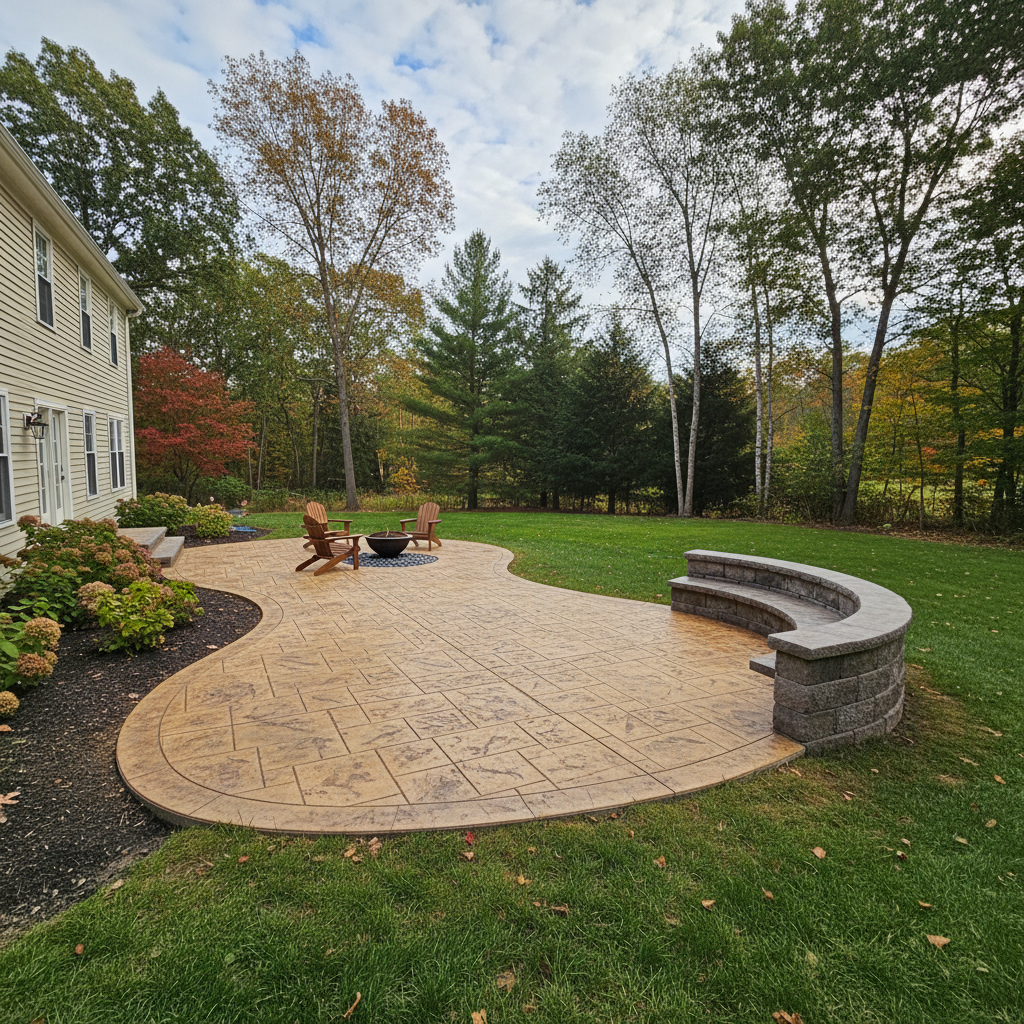
New England weather can be very harsh on concrete. If you live out here among the wooded hills and winding rural roads of West Greenwich, you already know our climate swings from freezing, snowy winters to hot, humid summers. That kind of annual weather cycle dictates everything about how concrete behaves, when you should pour it, and what you need to do to keep it from cracking apart.
Allied Concrete & Masonry tells homeowners who call looking to put in a new driveway, walkway, or patio that timing is everything.
Timing Your Concrete Pour Around Rhode Island Weather
You cannot just pour concrete whenever the mood strikes you. Temperature and moisture are the two big factors that make or break a slab. In an ideal world, late spring and early autumn give us the sweet spot for concrete work. Temperatures are moderate, which lets the cement hydrate properly without drying out too fast or freezing before it gains strength.
Summer pours can be tricky around here. When July and August bring those baking, humid days, concrete sets up much too fast. If it cures too quickly, it shrinks improperly and develops ugly surface cracks. Allied Concrete & Masonry has to adjust our mix designs or schedule pours for early morning just to keep up with the heat.
Winter is a whole different beast. Freezing temperatures will ruin wet concrete instantly because the water inside expands into ice crystals, destroying the chemical bonds before they even form. Once the ground drops below freezing and stays there, outdoor pours have to wait until spring unless you are prepared to tent the area and run heavy heaters, which gets expensive very fast.
Dealing with the Local Frost Line
Down here in Kent County, our frost depth gets down around 40 inches. That means any structural concrete or footings need to go deep enough into the ground, otherwise the winter freeze-thaw cycles will heave the earth right up and snap your slab like a saltine cracker. We see DIY patios and poorly installed walkways buckling every spring because someone skipped the proper sub-base prep or did not dig down far enough. Good drainage and a thick layer of compacted crushed gravel are your best defense against shifting soil.
Year-Round Protection Checklist
Once your concrete is safely cured, you still have to look after it as the seasons change. Here is how to keep your investment solid year after year:
- Seal the surface every couple of years to block out moisture and road salt.
- Keep expansion joints clear of debris so the concrete can move naturally when temperatures fluctuate.
- Clear heavy snow accumulation carefully, and skip harsh chemical de-icers that pit and spall the surface.
Taking care of your concrete is not complicated, but you do have to respect the seasons. Keep water moving away from your slabs, watch out for early signs of wear, and handle repairs before small hairline cracks turn into major trip hazards. For homes and businesses in West Greenwich, Allied Concrete & Masonry provides Concrete Contractor services.