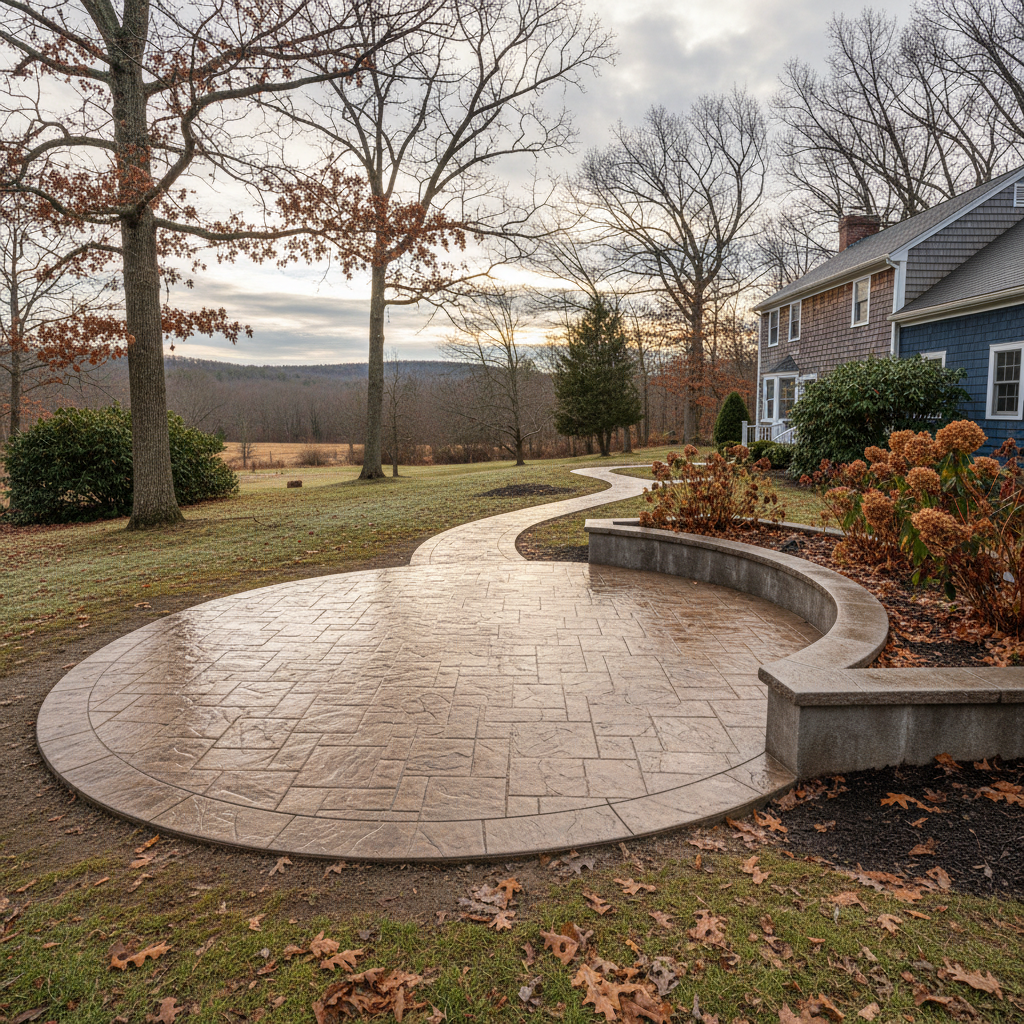
New England weather does not do favors for concrete. If you live out near Escheheag or closer to the Arcadia Management Area, you already know how fast our local climate can shift from soaking wet spring days to freezing winter slop. That constant swing from one extreme to the other puts serious stress on concrete driveways, concrete patios, and concrete walkways.
Most property owners call Allied Concrete & Masonry thinking they can pour a new concrete slab whenever they have a free weekend. But concrete is not paint; it needs specific conditions to cure right. When the temperature drops below freezing too fast, the water inside the concrete mix turns to ice before the chemical process finishes. That ruins the concrete strength from the inside out.
Timing Your West Greenwich Concrete Project
Late spring through early fall is prime time for concrete flatwork. The ground has finally thawed out from those brutal January freezes, and the daytime temperatures stay reliably above fifty degrees. That gives the concrete mix enough time to set properly without needing heavy additives or constant thermal blankets.
Allied Concrete & Masonry stays booked solid from June through September for a reason. Fall can also work well, provided we get those crisp October days before the overnight frost starts creeping in. If you try rushing a concrete project in November just to get it done before the holidays, you are rolling the dice on structural integrity.
Protecting Your Concrete Slabs Year-Round
Winter salt is enemy number one for cured concrete. When the snow piles up on your concrete driveway near Route 3, avoid using harsh rock salt or chemical de-icers that eat away at the surface paste. Sand is always a safer bet for traction.
Concrete sealing makes a massive difference out here in Kent County, where damp soil and freeze-thaw cycles conspire to crack unprotected concrete slabs. Applying a quality penetrating sealer every couple of years keeps moisture from sinking into the pores. Allied Concrete & Masonry has torn out too many concrete driveways that could have lasted another decade if someone had just taken ten minutes to roll on a coat of concrete sealer.
Keep an eye on drainage around your concrete slabs, too. If water pools near the edge of your garage floor or patio, it will find its way underneath when the temperature drops. A little bit of proactive grading and concrete maintenance now saves you from writing a large check later.