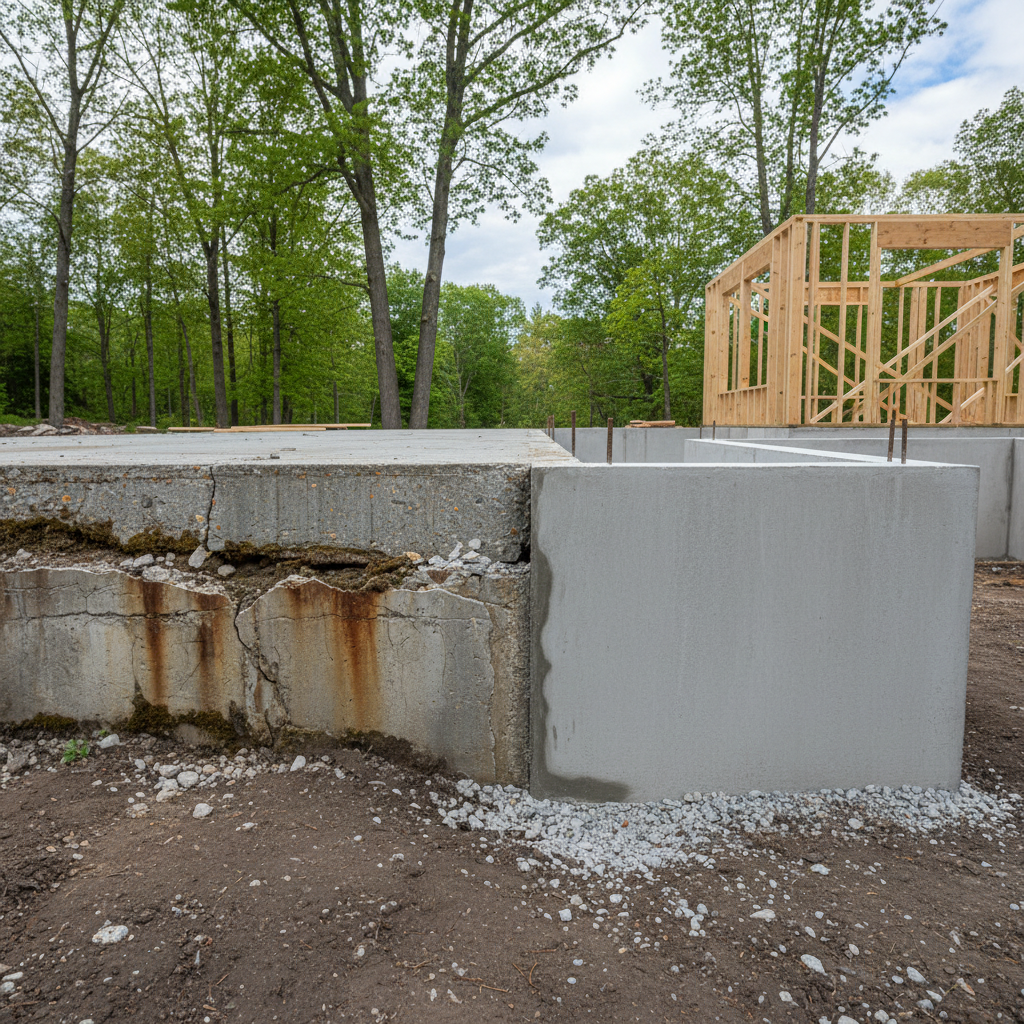
Alright, let's talk foundations. When you're building a new home or adding a big extension here in West Greenwich, one of the biggest decisions you'll face is what kind of foundation to put down. It's not just about holding up the house, you know; it's also about managing water, insulating properly, and making sure everything stays stable for years to come. Most folks are looking at two main options: poured concrete or concrete block. Both have their place, but they're definitely not the same thing.
Poured Concrete Foundations: The Solid Choice
Poured concrete foundations are exactly what they sound like. We dig the trenches, set up forms, and then pour ready-mix concrete right into those forms. Once it hardens, you've got a single, seamless wall. Think of it like one giant, continuous piece of rock holding up your house.
Pros of Poured Concrete:
- Strength and Durability: This is where poured concrete really shines. Because it's one solid piece, it's incredibly strong. It handles pressure from the soil pushing against it much better than block, which is a big deal around here with our clay-heavy soils that can expand and contract.
- Water Resistance: A seamless wall means fewer places for water to sneak in. Now, no foundation is 100% waterproof without good drainage and waterproofing membranes, but poured concrete naturally resists moisture better than block, which has all those mortar joints. This is crucial for basements in areas like ours, especially with the spring thaws and heavy summer rains we get.
- Faster Installation: Once the forms are up, we can often finish a poured foundation in just a day or two, assuming the weather's good for curing. This can really keep your project moving along.
Cons of Poured Concrete:
- Cost: Generally, poured concrete can be a bit more expensive upfront. That's mainly because of the cost of formwork and the specialized equipment needed for pouring.
- Repair Complexity: If a crack does show up in a poured wall, fixing it can sometimes be a little more involved than just patching a block wall.
Concrete Block Foundations: The Traditional Approach
Concrete block foundations, also known as CMU (Concrete Masonry Unit) foundations, are built by stacking individual concrete blocks with mortar in between. It's basically a bricklaying process, but with much bigger units.
Pros of Concrete Block:
- Cost-Effective: Often, block foundations can be a bit cheaper to install, especially if you're working with a masonry crew that specializes in block work. The materials themselves can be less expensive than the total cost of ready-mix concrete for a poured wall.
- Flexibility in Design: It's sometimes easier to add custom shapes or openings with block, since you're building it piece by piece.
- Easier to Repair: If a block gets damaged or a mortar joint fails, it's usually a pretty straightforward repair to replace a section or re-point the mortar.
Cons of Concrete Block:
- Water Penetration: This is the biggest drawback, especially in our climate. Every single mortar joint is a potential pathway for water. Without careful waterproofing and drainage, block foundations are more likely to have moisture issues in basements. I've seen plenty of damp basements in older West Greenwich homes that had block foundations where the waterproofing just wasn't up to snuff.
- Less Lateral Strength: Block walls are strong when you push down on them, but they don't handle sideways pressure (like soil pushing against them) as well as a single, poured wall. Over time, you might see block walls bowing or cracking because of hydrostatic pressure if the drainage isn't perfect.
- Longer Installation Time: Laying blocks takes time. It's a more labor-intensive process than pouring, which can extend the foundation phase of your project.
My Recommendation for West Greenwich Homeowners
Look, both options are viable, and I've built plenty of both over the years. But if you're asking me, for most new residential construction here in West Greenwich—especially if you're planning on using your basement for anything more than just storage—I'm going to lean heavily towards a poured concrete foundation.
Why? It comes down to our specific conditions. We get a lot of rain, we have freeze-thaw cycles, and our soils can be a mix of everything from sandy loam to heavy clay. That means you need a foundation that can stand up to pressure and resist water. The superior strength and natural water resistance of a poured concrete wall just make it a more reliable, long-term solution for keeping your home dry and stable.
While the upfront cost might be a little higher, the comfort you get from knowing it's done right and the reduced risk of water issues down the line are well worth it. You're building something that's meant to last generations, and the foundation is literally the bedrock of that investment. You want the best you can get, right?
Of course, every project is unique. We at Allied Concrete & Masonry always come out, look at your specific site, and talk through your plans before making a final recommendation. But as a general rule, poured concrete is tough to beat for our local conditions.