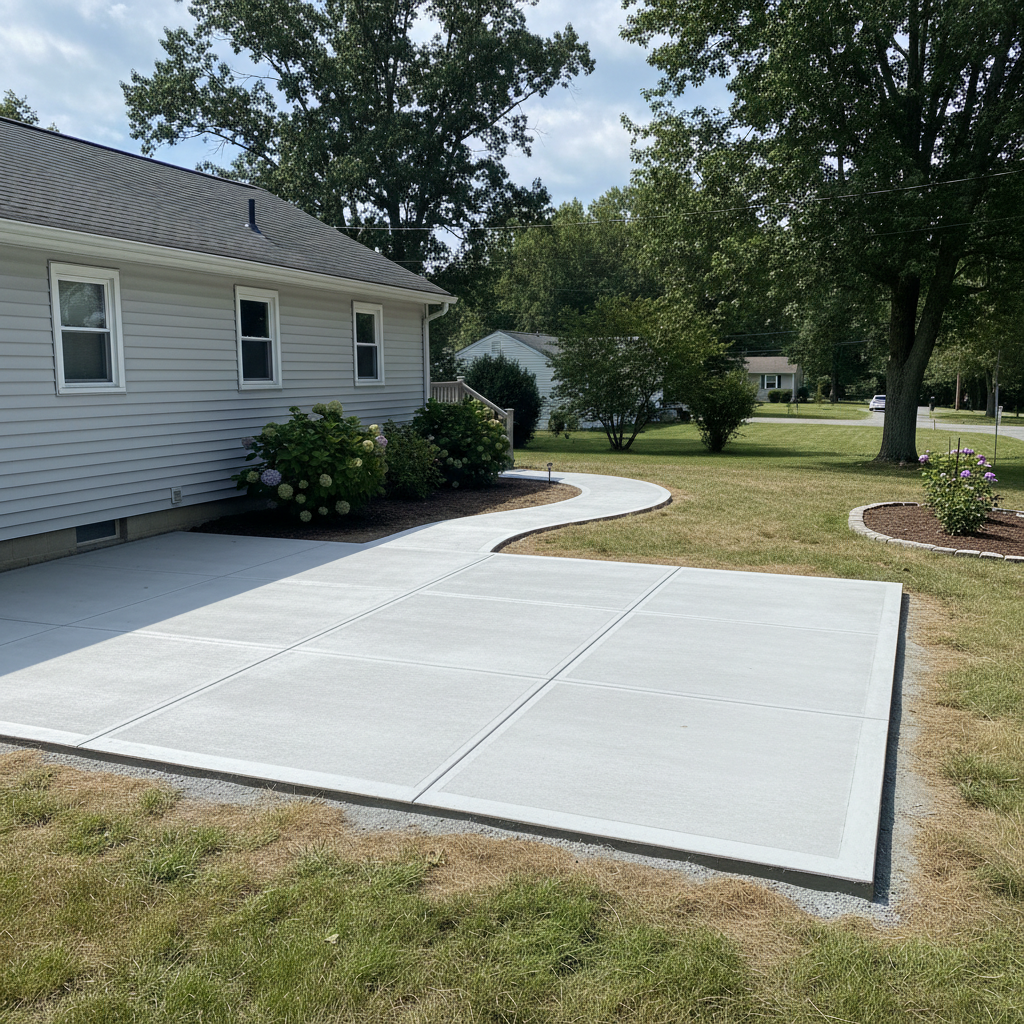
Let's talk money. You're probably thinking about a new concrete project – maybe a driveway, a patio, or a foundation for that new shed – and, naturally, you're wondering what it's going to cost you. There's no simple 'one-size-fits-all' answer, unfortunately, but I can certainly give you a pretty solid idea of what to expect right here in West Greenwich.
What Really Drives Concrete Project Costs?
A few big things push the price up or down. It's not just the concrete itself, you know; there's a lot more that goes into it. Think about it kind of like building a house – the materials are one thing, but the labor, the site prep, and those finishing touches all add up.
- Size and Thickness: This is probably the most obvious factor. A bigger area means more concrete, more labor, and more materials for the base. A standard 4-inch thick slab usually works for patios and sidewalks, but a driveway, well, that needs to be at least 5-6 inches thick to handle vehicle weight without cracking too soon. If you're pouring a heavy-duty slab for something like an RV pad, you might even go thicker, which really bumps up the yardage.
- Site Preparation: This is huge, and often people underestimate it. Is the ground level? Do we need to dig out old concrete or soil? Are there roots we have to remove? Is the drainage good, or do we need to bring in fill and compact it properly? Sometimes, especially in areas with a lot of ledge like we have around West Greenwich, excavation can get complicated and costly. If we hit a lot of rock, that means extra time and specialized equipment.
- Accessibility: Can a concrete truck easily get to the pour site? If we have to pump the concrete over a long distance, maybe around a house, or down a steep slope, that's an extra cost for the pump truck and its operator. Easy access keeps costs down, plain and simple.
- Reinforcement: Most good concrete jobs include rebar or wire mesh. This isn't optional, by the way; it's absolutely critical for strength and for stopping cracks. The type and amount of reinforcement will definitely affect the material cost.
- Finish Type: A basic broom finish is the most economical option. If you want something decorative like stamped concrete, exposed aggregate, or a colored finish, those are specialized techniques that take more time, more skill, and more materials, so they cost more.
- Permits: Depending on the size and type of project, you might need a permit from the town. That's a fee you'll have to factor in.
Typical Cost Ranges for West Greenwich Concrete
Alright, let's get to some actual numbers. Keep in mind these are ranges, and your specific project might fall outside them depending on those factors I just mentioned. These prices generally include excavation, base prep, concrete, reinforcement, and a standard broom finish.
- Basic Concrete Slab (Patio, Walkway): For a standard 4-inch thick slab, you're usually looking at $8 to $12 per square foot. So, a 10x20 foot (200 sq ft) patio could run you anywhere from $1,600 to $2,400. This assumes good access and minimal site prep, of course.
- Driveways: These are thicker, typically 5-6 inches, and often involve more extensive site prep. You're generally in the range of $10 to $16 per square foot. A 20x40 foot (800 sq ft) driveway could be $8,000 to $12,800. If you want decorative finishes, add another $5 to $15 per square foot on top of that.
- Foundations/Shed Slabs: These vary a lot based on size, thickness, and any specific engineering requirements. For a basic 4-6 inch shed slab, you might be in the $9 to $14 per square foot range. Larger, structural foundations are quoted on a case-by-case basis.
- Stamped Concrete: This is where things get pricier because of the labor and specialized materials involved. Expect to pay anywhere from $15 to $25+ per square foot, depending on the pattern complexity, colors, and sealers.
These numbers are just for the concrete work itself. If you need extensive landscaping, drainage systems, or retaining walls built alongside the concrete, those will be separate costs.
What Should a Good Quote Include?
When you get a quote from a contractor – and you should always get at least three, seriously – make sure it's detailed. A good quote from Allied Concrete & Masonry, or any reputable company, should clearly outline:
- The exact scope of work: What's being poured, where, and how big.
- Thickness of the concrete.
- Type of reinforcement (rebar, mesh).
- Type of finish.
- Site preparation details: Excavation, grading, base material.
- Any demolition and removal of existing concrete.
- Permit responsibilities (who pulls it, who pays for it).
- A clear total price and payment schedule.
- Warranty information.
If a quote is just a single number on a napkin, walk away. You absolutely need to know what you're paying for.
How to Avoid Overpaying
Nobody wants to get ripped off, right? Here's my advice:
Investing in concrete is a big deal for your property. Do your homework, ask the right questions, and you'll end up with a quality job that lasts for years without breaking the bank.